Hops
Humulus lupulus
Facts
- The scientific name, Humulus lupulus, means wolf among sheep, as hops grow up and over other plants.
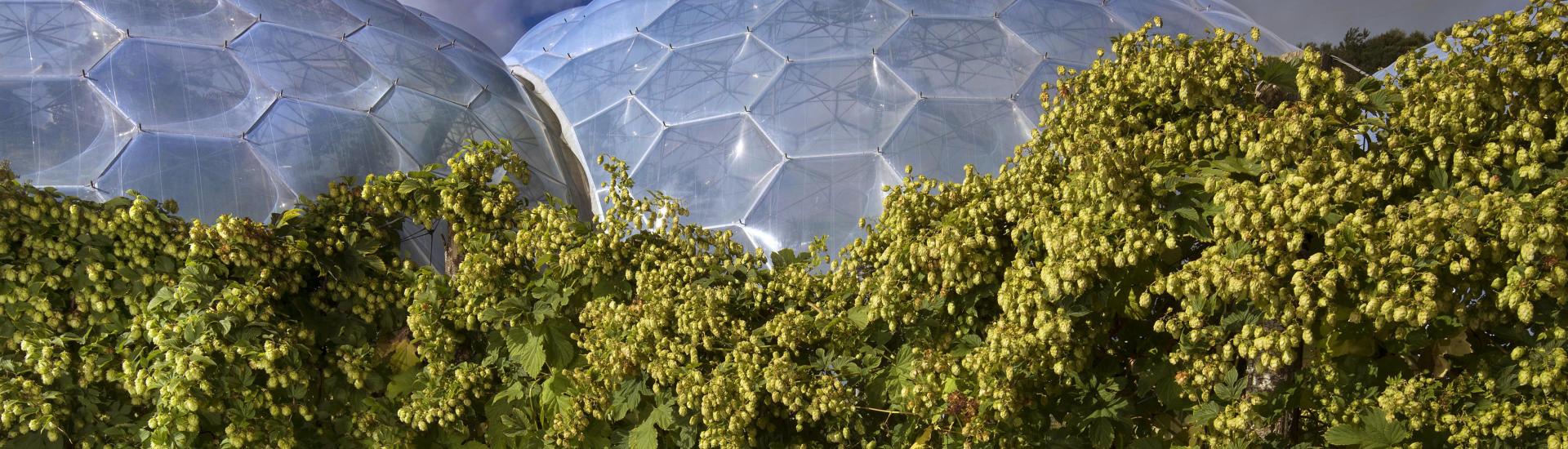
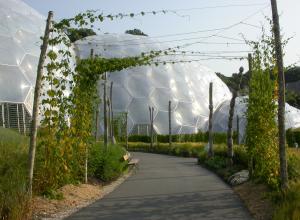
- Hops can be grown in different ways: on hop hills (on 10-foot tall posts in a mound of compost) up sisal strings suspended from wires attached to chestnut posts trained by ‘butchers’ and ‘umbrella’ and ‘Worcester’ methods. Hop workers used to wear stilts to sort the wires out.
- Hops are susceptible to several pests and diseases and often require spraying.
Where it grows
Hops, like barley, come from South-East Asia, and have been used in beer for the last 10,000 years. In Europe they have been used since the 9th century and in Britain since the 15th century. They are now are grown across the Northern Hemisphere. They generally require an average summer temperature of 16–18°C, but do well over a wide range of soils provided they are fertile and moisture-holding: light to heavy loams are best.
Common uses
Hops were originally used in beer-making to stop the drink going sour. In the days when water in Britain was not clean, beer provided a nutritious thirst-quenching alternative. As late as the 1600s men, women and children sometimes drank around three litres of weak beer a day.
Today the ale keeps anyway due to high hygiene standards but hops are still used for the characteristic bitter taste, flavour stability and retention of the foamy head on top. Globally unfertilised flowers are used in brewing and are produced in an all-female ‘nunnery’ hop gardens. Hop production in Britain differs in that male hops are allowed in at a ratio of 1-to-200. This was a very early form of biological control! Under Britain’s particular climatic conditions the unfertilised stigmas were a focus for powdery mildew infection. Pollination led to the stigmas on the female flowers withering rapidly, reducing the chance of infection.
Conservation story
Recently a new hop variety has been launched that is suitable for organic production with minimal use of pesticide: ‘Boadicea’ is a dwarf English female hop that is resistant to damson hop aphid and powdery and downy mildew.
Video
Sharp's brew sustainable ale for Eden
Martin gives us a brief history of brewing and tells us about Sharp's Eden ale.
http://www.youtube.com/watchGlossary
- Bract: modified or specialised leaf in a flowering structure (inflorescence).
- Herbaceous: possessing characteristics of herbs. Loam: well-drained soil composed mainly of sand and clay.
- Lobe: incomplete division in any plant organ (eg leaf).
- Panicle: branched flower stalk.
- Perennial: lives for at least two years.


Your comments
Leave your comments and ask questions about this plant - we'll do our best to answer them! The name you give below will appear next to your comment. Your comment will appear directly below the comment you replied to.
Comments are personal views and any information given in them may not be accurate. We will check comments before we publish them. Please make sure your comments are relevant to the page, respectful of others (eg respect people's privacy by not naming them) and don't contain offensive language.
Read our full privacy policy
Add new comment