
Becoming climate positive: Eden's journey
We’re ‘walking the talk’, transforming our operating systems to eradicate emissions and showcase a working demonstrator of regenerative sustainability.
We’ve joined the Race to Zero, through our partners Planet Mark, pledging to become a climate positive organisation by 2030.
What does this mean?
At a glance
The climate lexicon

The climate lexicon – unpicking the language
Our carbon footprint
To help us understand and tackle our greenhouse gas emissions, we've divided them into three areas (scopes 1-3) that align with international Greenhouse Gas Protocol guidelines.
Our 2019/20 carbon footprint broken down:
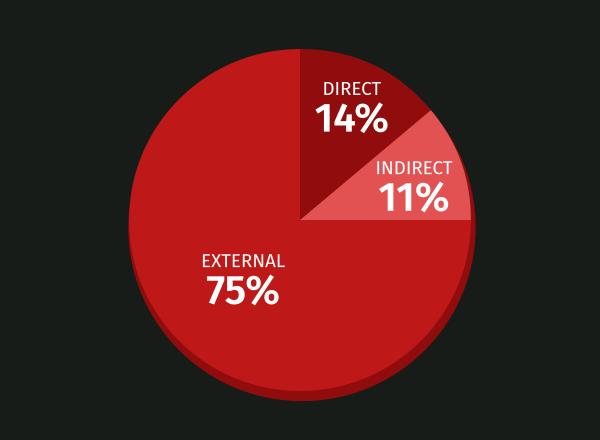
Scope 1 (direct – accounts for 14% of our emissions):
- Heating, cooling, moving around
Scope 2 (indirect – 11%):
- Purchased electricity
Scope 3 (external – 75%):
- Buying in food, goods, materials (includes the CO2 produced in making and transporting things), travel (staff, visitors, suppliers) and building things
Today

Energy
We heat our Biomes using our onsite geothermal plant, with everything else supplied from 100% certified renewable energy
We prioritise local generation sources as much as possible.

Vehicles and travel
The majority of our Eden fleet are Volvo XC40 Recharge pure electric vehicles and run on renewable electricity.

Nature
Around 10,000 tonnes of carbon are locked up in the soil that our plants depend on.

Supply chain
85% of our catering supplies are sourced locally. Items in our shops are made locally and from recycled or recyclable materials.
Goods, services, commutes & travel still cause emissions.

Water and waste
70% of our waste is recycled. Over two thirds of our irrigation and loo flushing water is recycled rainwater.
Reducing our carbon footprint
Progress on our carbon footprint so far
By 2030
We’re transforming our energy infrastructure and demonstrating what’s really possible.
How
Geothermal
Our geothermal plant has been producing heat since June 2023. This heats our Biomes, helping to completely phase out fossil fuel use. This also heats our new nursery facility, Growing Point, where we now grow plants for our gardens, restaurants and shop.
Progress so far
- We’ve completed the first construction phase of our geothermal energy plant, and in June 2023 we began heating the Biomes and plant nursery using this new system. In 2024/25 geothermal heat and solar PV electricity accounted for a record 13% of total site energy consumption, increased from 1% in 2019/20 and 8% in 2023/24.
- This was also helped by the installation of the new Growing Point rooftop 140 kWp solar PV system completed in December 2024, which has the potential to meet up to 4% of site electricity demand and avoid 32 tCO2e per annum in scope 2 emissions.
- 2024/25 total energy consumption was reduced by 18% compared to 2019/20 but increased by 11% compared with 2023/24, predominantly due to higher geothermal heat offtake (increased by 84%) but also higher gas consumption when needed to meet exceptional heating demands during prolonged cold winter weather.
- Following the ESOS energy audit completed in 2024, 14 energy saving measures were completed and implemented in 2024/25, including LED lighting replacement and low/zero cost building controls adjustments to achieve 38,838 kWh in annual energy savings.
We aim to have cut visitor travel emissions by 55%.
How
Electric vehicles
We’re taking fossil fuel vehicles out and bringing electric buggies and an electric car fleet in. We’re installing infrastructure for charging electric vehicles, increasing our public transport routes and exploring how we can use Park and Ride from further afield.
Active travel
Promoting sustainable, active travel to our site where possible.
Progress so far
We’ve installed our electric vehicle charging hub, which is powered by renewable energy and supports our visitors in making more zero emission journeys to and from our destination.
3,734 EV charging sessions were completed in 2024/25 helping to avoid transport emissions of 5 tCO2e.
Delivered over the last year, our Active Travel project mapped walking routes from local villages into Eden Project and led guided walks to familiarise people with the routes. Active travel reduces carbon and other emissions as well as increasing physical activity. We also added four new benches as rest stops and new map boards to help with wayfinding.
We are protecting, restoring and creating natural carbon ‘sinks’.
How
We are working to help nature take carbon dioxide gas out of the atmosphere and lock the carbon up in plants and in the ground as a solid. We’re developing our own CO2 removal projects, such as woodland and wildflower meadow creation and biochar production.
We will continue to make soil, grow plants, regenerate landscapes, make and use biochar, work on national and international regenerative projects and run education programmes – all activities that also increase biodiversity.
Regenerative horticulture
- Reclaiming and restoring land and regenerating landscapes
- Exceeding national targets on biodiversity gain
- Regenerating soils and monitoring soil carbon capture
- Growing thousands of carbon-capturing plants
- Making and using biochar
- Only using peat-free composts
- Demonstrating and teaching regenerative agriculture and sustainable soil management
Wild sites
We’re working on projects both nationally and internationally, including being the home of the National Wildflower Centre and continuing the regeneration of a dry tropical forest in Costa Rica, to increase biodiversity and fight climate change.
Halting deforestation
All of our activities are aligned to respect, protect and repair the natural world, halting biodiversity loss and deforestation. We avoid palm oil where possible. Where it is used, we only purchase or sell products that contain RSPO-certified palm oil. We support relevant certification schemes that support our mission, such as Fairtrade, FairWild and Rainforest Alliance.
Progress so far
- In Cornwall, through the National Wildflower Centre and Living Landscapes Team, we have created 5.17 hectares of new wildflower habitats in our outer estate as well as continuing to manage 1.73 hectares of established wildflower fields.
- We have also created wildflower verges along our main access roads using a mixture of annuals and perennials to ensure wildflowers will be a key element of our site for years to come. The pollinator impact of the meadows will be monitored by our research collaboration with the University of Exeter.
- Further woodland creation was completed during 2023/24 at Eden Project Cornwall through significant mixed species tree planting across four acres of the site, supporting greater diversity and resilience of species, as well as creating better opportunities for biodiversity corridors and carbon sequestration.
Eden Project Cornwall is over two decades old. We're retrofitting old site systems to reduce emissions from our operations, implementing regenerative circular systems and reducing our energy use. All future Eden Projects will be designed, built and run in a sustainable way.
How
Green infrastructure
We're installing clean technologies like geothermal energy, as well as replacing gas boilers and cooking systems. We're also installing more solar PV and electric chargers as well as exploring the best circular systems for water and waste.
Regenerative design, sustainable construction
We are aiming for exemplar net zero carbon, regenerative design and construction approaches at new Eden Project sites to support both nature recovery and high levels of circularity through the re-use and reclaim of local materials.
Local materials and circular systems
We’re sourcing materials locally to avoid transport emissions and maximising reusable construction materials.
Progress so far
- Our new on-site nursery Growing Point uses recycled and reclaimed materials, geothermal heat and harvested rainwater and provides plants and food for our gardens, restaurants and shop.
- We completed a whole life cycle carbon assessment of Growing Point which reported an 89% reduction in embodied carbon (avoiding almost 1,000 tonnes of CO2e) compared to a traditional glass house design. This highlighted the benefit of prioritising natural, regenerative materials and will help to inform our construction approach on all future Eden Projects.
We’ll continue to develop responsible supply chains in order to reach net zero by reducing emissions from external goods, service and travel. By 2030, we aim to reduce these emissions by 55%.
How
Responsible supply chains
Around 75% of our carbon emissions currently come from scope 3 emissions, including goods and materials coming into the project along with staff and visitor travel.
To help reduce this we have developed a sustainable procurement policy that seeks to:
- Achieve procurement decisions that are economically viable, socially acceptable and environmentally sound.
- Benefit the local economy and reduce our carbon footprint by sourcing from local producers and suppliers of goods and services.
- Support global trade and communities in emerging economies through fair trade schemes.
- Condemn compulsory or forced labour and support the Government's implementation of the Protocol on Forced Labour and other relevant treaties.
Responsible supplier charter
We’re developing a responsible supplier charter that will encourage suppliers to adopt their own decarbonisation pathways that align with ours.
Local skills and industry
We are sourcing goods and services in ways that minimise product and transport emissions. We are supporting and developing sustainable, local supply chains.
Progress so far
- We’ve calculated the extended carbon footprint of our supply chain, having undertaken an emissions hotspot study with Planet Mark.
- We are sharing this data with our suppliers and partners to help minimise the environmental impact of our supply chain and operations together.
- We held a supplier day at Eden Project Cornwall in 2023 that engaged over 20 of our largest local suppliers on Eden’s mission and explored opportunities for collaboration around ways of working, sustainability and responsible procurement.
- Our food strategy at Eden Project Cornwall advocates a food system approach in sourcing our menus. Focussing on the way food is grown, processed, transported and served, as well as its sustainability and contribution to reducing our scope 3 carbon footprint from purchased goods.
- A number of sustainability related initiatives were implemented in collaboration with suppliers during 2023/24, including a reusable container scheme with Origin Coffee and reusable milk dispensing units with Rodda’s, avoiding 554kg and 483kg of packaging waste per annum respectively.
We continue to recycle 70% of our waste, and over two thirds of our irrigation and loo flushing water is harvested from ground and rain water.
Working with Re:Universe and Circular & Co, in 2024/25 we launched a return deposit coffee cup scheme on-site, significantly reducing the associated waste and carbon impact of around 35,000 takeaway coffee servings. Following introduction on site, we have seen a return rate well above 90% and in some months even close to 100%!
The future
Our plans
- Supplier charter – working with our supply chain and key suppliers, we’ll develop the supplier charter to reduce external/scope 3 emissions.
- Energy efficiency – we’ll continue to deliver the energy saving initiatives identified in our ESOS energy audit, with at least 15 lighting replacement projects being targeted for completion in 2025/26.
- Natural carbon removals – we’ll further develop opportunities to create carbon sinks on our own sites.
- Energy and transport – Energy efficiency – we’ll continue to deliver the energy saving initiatives identified in our ESOS energy audit, with at least 15 lighting replacement projects being targeted for completion in 2025/26.
As well as everything listed above, we are working on:
- Engagement – we provide our audiences with hope and agency in response to the planetary emergency, demonstrating that the solutions do exist and communicating this through content that is underpinned by sound science. Our Science Advisory Panel and University partners help inform content development.
- Financing – we continually reinvest into site infrastructure and work with external funding partners to unlock the benefits of new renewable technologies.
- Governance – the Leadership team works with all the teams at Eden Project Cornwall to support and enable our mission related projects. The central Eden Project support teams operate each Eden Project site, project and programme.
Join us on the journey


CO₂ levels today
Widget credits
This project is led by Matthew Shribman with the support of Cambridge Zero / University of Cambridge.
Developers: Chris Butterworth, Richard Coates, Rowland Williams, Keith Alexander, Erika Antiche Garzón, Max Palmer
Designers: Bella Soares, Chris Butterworth
Special thanks: Gary Fearnall
The widget is endorsed by the Grantham Institute, the 2 Degrees Institute, Scripps Institution of Oceanography at UC San Diego and Reading University’s Department of Meteorology.
The original report, with more details about the widget, its ideation, and suggestions for further communication, is available here.